
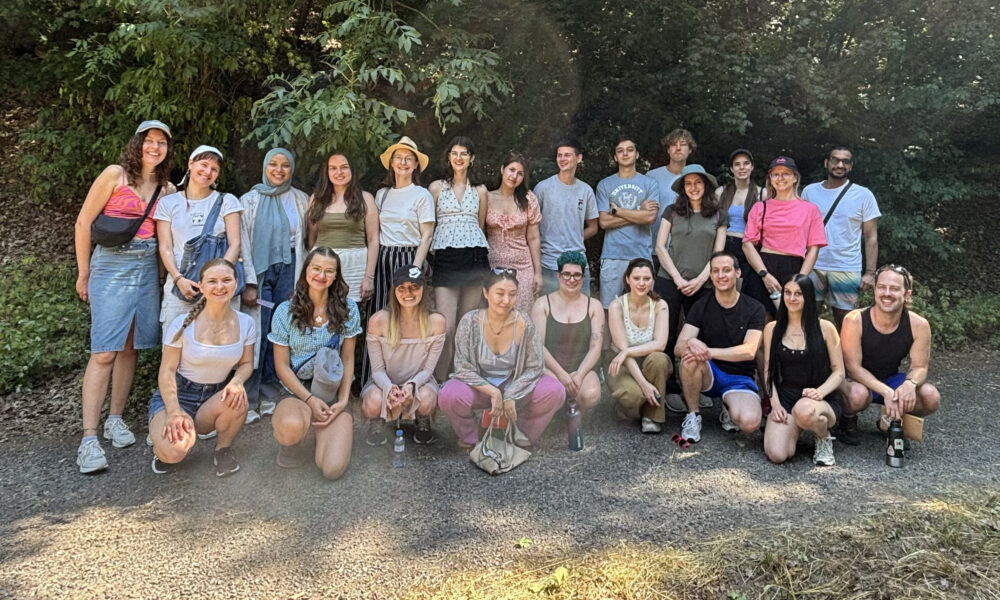
From June 24th to June 30th, 2026, our team from Germany (representing NaturKultur e.V.) took part in the Erasmus+ Training Course “MIND” (Mindfulness, Inclusion, Non-judgment, Diversity). Formed under a KA2 Key Action project approved by the Czech National Agency and co-funded by the European Union, the initiative was organized by European Youth Centre Břeclav (EYCB) in the village of Vranov nad Dyjí, Czech Republic.
The project brought together 24 youth workers from Germany, Croatia (BetterMe), Hungary (Európa Ifjúsága Egyesület), and the Czech Republic. The exchange was further enriched by participants with diverse cultural backgrounds, including Kyrgyzstan, Ukraine, Kazakhstan, Egypt, Türkiye and Poland—bringing unique perspectives and deep cultural wealth to every discussion.
When working with young people, the topic of mindfulness and mental health is often overlooked. As youth workers, our primary focus is supporting, guiding, and caring for others—a role that frequently leads us to neglect our own needs. This made the core themes of the MIND project—mindfulness, inclusion, non-judgment, and diversity—especially meaningful.
Youth work is deeply inspiring, but it can also be emotionally demanding. Holding space for the struggles of others while feeling the responsibility to always remain “strong” leaves little room for personal recovery. Over time, this imbalance can lead to emotional fatigue, stress, and burnout.
By participating in this training course, our aim was to explore healthier, more sustainable approaches to youth work. We were eager to gain practical tools for protecting our energy, creating balanced routines, and building peer-support networks. Beyond methods and theories, the course provided a safe environment for honest conversations and reminded us that caring for ourselves is just as important as caring for those we serve.
The five-day program was filled with meaningful, hands-on learning:
Mindful Mornings: Each day began with a reflection walk and guided meditation. Breathing exercises and quiet reflection allowed us to connect with the peaceful surroundings of Vranov nad Dyjí and enter each day grounded.
Interactive Workshops: Afternoon and evening sessions combined non-formal learning methods, practical exercises, and role-plays.
Balanced Structure: Regular coffee breaks and shared meals allowed space to unwind, process lessons, and connect informally.
Cross-Cultural Community: From discussions during sessions to swimming together and exploring the nature around Vranov nad Dyjí, we built strong, lasting international connections.
Mo’s Experience:
“The MIND Training Course was more than just a learning experience for me. It introduced me to topics I had never explored before and helped me notice hidden struggles in myself and those around me—areas that need more care, healing, and growth.
Workshops such as ‘Seeing the Unseen: Identifying Early Signs of Mental Health Challenges,’ ‘Step into Their Shoes: Practicing Sensitive Conversations,’ ‘Burnout Prevention for Youth Workers,’ ‘Trauma-Informed Care Approaches in Youth Work,’ and ‘Setting Professional Boundaries’ were especially impactful. I plan to adapt several of these methods for the summer school program at my university in Berlin and apply them in future Erasmus+ projects.
Discovering these support methods felt like a ray of light. I am truly grateful for opportunities like this that enable us to learn, reflect, and support others more effectively.”
Benedikt’s Experience:
“I greatly enjoyed the MIND training course in Vranov nad Dyjí. As my first Erasmus+ project, I was deeply impressed by the organization, the contents, and the participants. Despite facing challenging summer temperatures of almost 40°C, we maintained a great balance between productive learning, hydration breaks, and enjoying our beautiful surroundings.
The topics felt practical and directly applicable. As a psychologist, I recognized many of the theoretical foundations and appreciated the balance between detail and real-world application. One of my biggest takeaways was the power of small interventions—a brief breathing pause or helping someone call a loved one in times of stress. Moving forward, I am considering pursuing a certificate in Mindfulness-Based Stress Reduction (MBSR) to support young people dealing with stress and anxiety.
The module on ‘Setting Professional Boundaries’ was particularly crucial. While youth workers offer vital mental health support, it is essential to remain aware of limitations and avoid attempting to replace certified mental health professionals.
The interactive activities and role-plays were the highlight for me. They allowed us to bond, test out techniques, and exchange practical advice based on our own experiences across different countries. It was an educational, uplifting experience I would repeat in a heartbeat.”
The MIND project was financed by the Erasmus+ Programme of the European Union (KA2 Cooperation Partnership in the field of Youth) and organized by European Youth Centre Břeclav (EYCB) in cooperation with partner organizations NaturKultur e.V. (Germany), BetterMe (Croatia), and Európa Ifjúsága Egyesület (Hungary).
Interested in participating in upcoming international exchanges and training courses? Check out our open calls on our website here.