I joined the European Solidarity Corps because I wanted to experience an international volunteering environment, contribute with my media and communication background, and learn through living and working with people from different cultures. After four months at NISI Glamping in Raches, I can say that the experience gave me much more than I expected. It was a very active project combining environmental work, sports, youth activities, cultural exchange, creativity and community life.
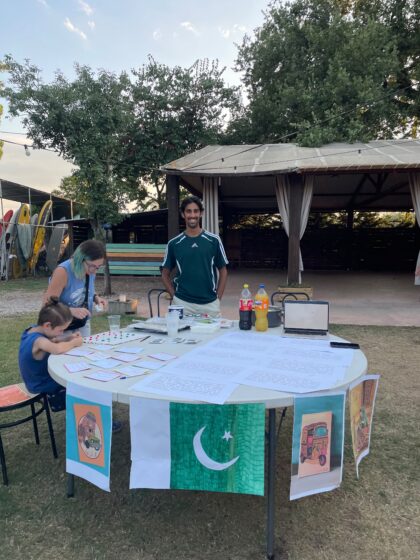
The first two months began with a group of nine volunteers. During May, we settled into life at NISI through gardening, recycling, beach activities, sports and group events. We also explored the local area through activities such as the Mission Impossible scavenger hunt, kayaking and boating. One of my first important experiences was the Pakistani Culture and Language Café. I prepared and delivered a 90-minute workshop about Pakistani culture, family traditions, food and language. I used a presentation, Urdu phrase cards, an interactive true/false activity and traditional music and dance. It was my first time leading a workshop of this kind, and seeing the group participate throughout the session gave me confidence in my ability to facilitate activities.
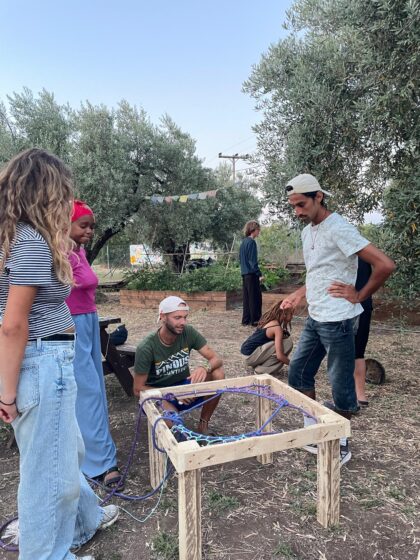
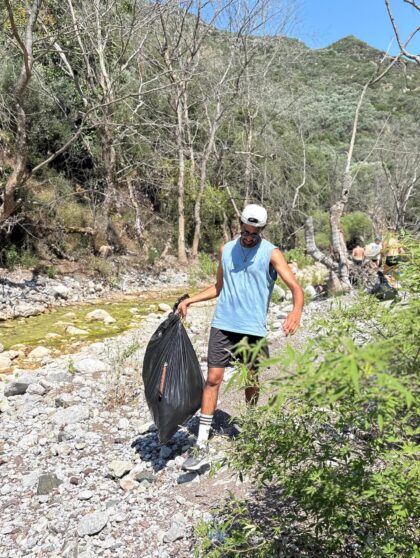
May also included the Human Library activity with local Greek high school students, where volunteers answered questions about their countries, cultures and beliefs. I participated in a blood donation activity at Raches School and continued taking part in environmental work, including gardening and maintaining the recycling area.
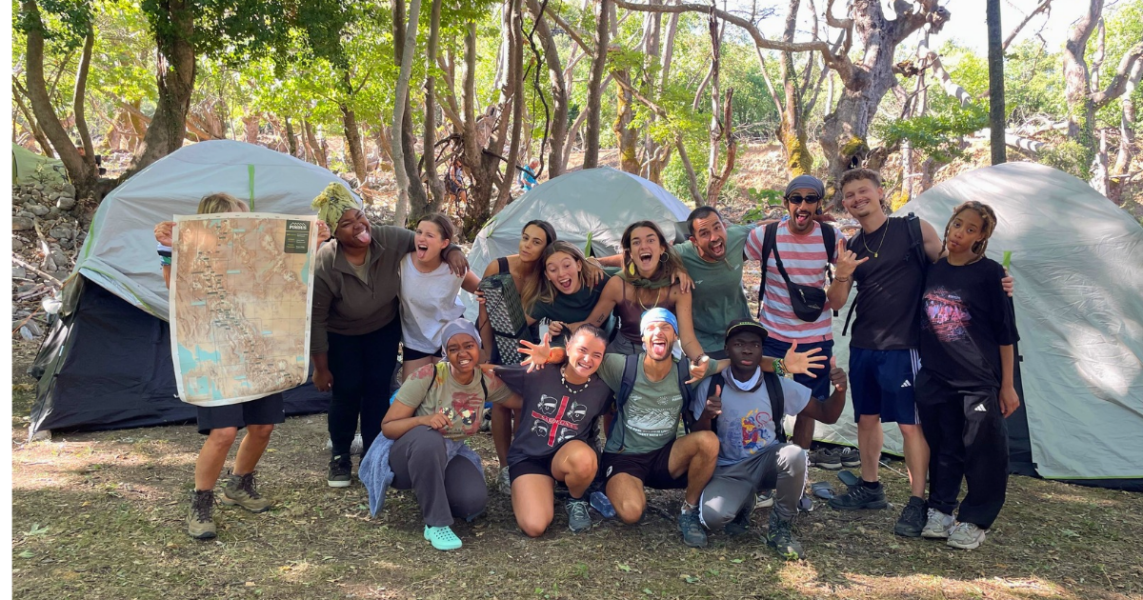
June brought several new challenges. I took responsibility for the equipment for the Pindus hiking and camping trip, checking tents and cooking equipment and helping with the group’s logistics. We also travelled to Thessaloniki and later participated in the Evergreen partner project, where we worked on practical construction and farm-related tasks. Back at NISI, I continued taking part in sports, environmental activities and the board-game project. On 24 June, I delivered a cricket workshop, introducing a sport that most of the volunteers had never experienced before. I explained its history and basic rules and then organised a short outdoor match. June also marked the departure of three volunteers who had been with us from the beginning, which showed me how quickly relationships and routines can develop in an ESC project.
In July, four new volunteers arrived from France. I was no longer one of the newcomers, so I naturally started helping them understand the routines and activities at NISI. This was an important change for me because I could see the project from the perspective of someone who already knew the environment. July included cultural workshops, sports, youth activities, environmental work and community events. I also worked on a Social Activism workshop where I delivered activities like Spectrum of Allies and Mini campaign on how to start small steps in activism specifically in Raches which I think was great experience.
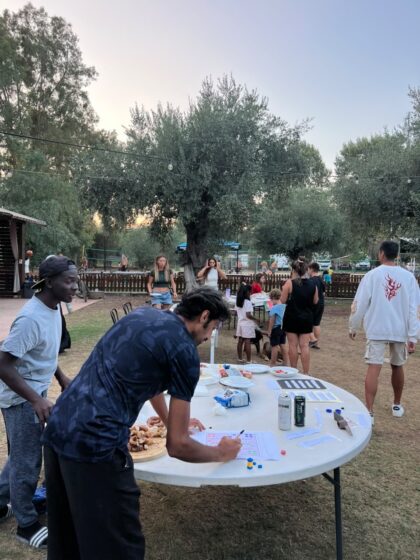
August was the final stage of the project. We returned to the Pindus mountains, this time camping near a river, and continued with hiking, cooking and group activities. Back at NISI, there were workshops, sports sessions, music and dance activities, the second Mission Impossible event, World Village activities, a mini-film festival and other group events. As the end approached, ordinary activities such as the final cleaning, last sessions and group gatherings became more meaningful. One of my strongest memories is the group gathering on the pier on 22 August. Standing together by the sea made it clear that four months of shared work and daily life were coming to an end.
The three most important things I learned were, first, how to take responsibility and lead activities rather than only participate in them. Designing and delivering workshops taught me to prepare carefully, communicate clearly and adapt to the group. Second, I learned how much can be achieved through intercultural cooperation. People can have very different backgrounds and still work together effectively when there is respect, patience and curiosity. Third, I learned to be more independent and practical. Living in a shared environment, travelling with the group, taking responsibility for equipment and participating in physical tasks required flexibility and cooperation.
What I liked most was the variety of the project. No two weeks felt exactly the same. I could work in the garden one day, facilitate a workshop another day, participate in a mountain trip, create media content or join a community activity. I also appreciated living close to the sea and having the opportunity to experience a small Greek community rather than only visiting Greece as a tourist. The most difficult part was adapting to the intensity of living and working closely with the same group for four months, but I see that as an important part of the learning experience rather than a negative aspect of the project.
The experience will influence my future both personally and professionally. I leave the project with more confidence in public speaking, workshop facilitation, intercultural communication, teamwork, practical responsibility and media documentation. It also confirmed that I enjoy combining media, communication and youth or community work. I have a clearer understanding of how I can use my background in media engineering in international and non-formal education environments.
I would strongly recommend the ESC experience at Wheeling2help to future volunteers. The project offered a wide range of activities, a beautiful environment and many opportunities to take initiative. The coordinators were available when support was needed, and the project allowed volunteers to bring their own ideas into the programme. There were naturally challenging days, but those were part of living and learning in a new environment. Overall, these four months were among the most valuable experiences of my life, and I am very grateful to NaturKultur, Wheeling2help and everyone who contributed to making the project possible.
—
Ahmar verbringt seinen Freiwilligendienst bei Wheeling2Help, sein Projekt wird von der Europäischen Union kofinanziert.
Wenn du etwas Ähnliches wie Ahmar erleben möchtest, schau dir unsere Calls hier an.